
How to Measure Bracelet Size: The Wrist Guide
Wrap a soft tape measure snugly around your wrist just below the wrist bone, read the circumference in centimeters or inches, and add 1.5–2.5 cm (0.6–1 inch) depending on how loose you like your bracelets to sit. That wrist number plus the fit allowance is your bracelet size — a 15 cm wrist takes a 16.5–17.5 cm bracelet for the standard comfortable fit.
It takes two minutes with things already at home, and unlike ring sizing, wrist measurement is forgiving: bracelets have a whole centimeter of fit tolerance before anyone notices. Here's the exact method, the fit chart, and the adjustments for bangles versus chains.
Step 1: Measure Your Wrist
- Wrap a soft measuring tape around the wrist, just below the wrist bone (where a watch would naturally sit), with contact but zero compression — don't pull it tight.
- No tape? Use a strip of paper or string, mark where it overlaps, and measure against a ruler. Same as measuring for a ring, but around the flat of the wrist instead of a finger.
- Read it twice. Wrist measurements are stable across the day (unlike finger swelling), but one re-check eliminates tape-slack errors.
Write the number down in centimeters — that's your wrist circumference, the base for everything below.
Step 2: Add the Fit Allowance
A bracelet sized exactly to your wrist would feel like a cuff. The allowance is the comfort:
| Fit | Add to wrist size | Feels like | Best for |
|---|---|---|---|
| Snug | +1 cm (0.4 in) | Close contact; moves with you | Delicate chains, stacked pieces |
| Comfortable (standard) | +1.5–2 cm (0.6–0.8 in) | Slides slightly; the default | Most chain bracelets |
| Relaxed | +2.5 cm (1 in) | Drapes and shifts | Chunky styles, layered wrists |
Worked example: a 15.5 cm wrist → 16.5 cm snug, 17–17.5 cm standard, 18 cm relaxed.
The Bracelet Size Conversion Chart
| Wrist circumference | Snug size | Standard size | US women's average? |
|---|---|---|---|
| 13.5–14.5 cm (5.3–5.7 in) | 14.5–15.5 cm | 15.5–16.5 cm | Petite |
| 14.5–15.5 cm (5.7–6.1 in) | 15.5–16.5 cm | 16.5–17.5 cm | Common |
| 15.5–16.5 cm (6.1–6.5 in) | 16.5–17.5 cm | 17.5–18.5 cm | Common-plus |
| 16.5–17.5 cm (6.5–6.9 in) | 17.5–18.5 cm | 18.5–19.5 cm | Full |
| 17.5+ cm (6.9+ in) | 18.5 cm+ | 19.5 cm+ | Extended |
Most women's wrists fall between 14.5 and 16.5 cm, which is why 16.5–18 cm is the sweet spot for standard chain bracelets — but the measurement beats the average every time.
Bangles vs. Chains: One Important Difference
Chain bracelets close around the wrist, so the circumference is the whole story. Bangles must pass over the hand — the widest part of the hand, knuckles included — so a bangle's inner diameter needs to exceed your hand's width, not just your wrist's. To size for a bangle: tuck your thumb into your palm (as when putting one on), wrap the tape around that widest point, and choose a bangle whose diameter matches that number plus a little. This is why bangle sizing runs a size up from chain sizing for the same wrist.
Adjustable open bangles — the standard in stainless steel collections — sidestep the question entirely: the open gap flexes over the hand and then closes to the wrist, spanning one to two sizes of give.
The Charm Bracelet Note
Charm bracelets deserve one extra half-centimeter of allowance beyond the standard fit: each charm adds weight and bulk to the wrist side, and a bracelet that started perfectly snug becomes tight as the collection grows. If you're starting a charm bracelet you plan to build over years, size for the wrist you'll have with ten charms, not zero.
Steel's Sizing Advantage
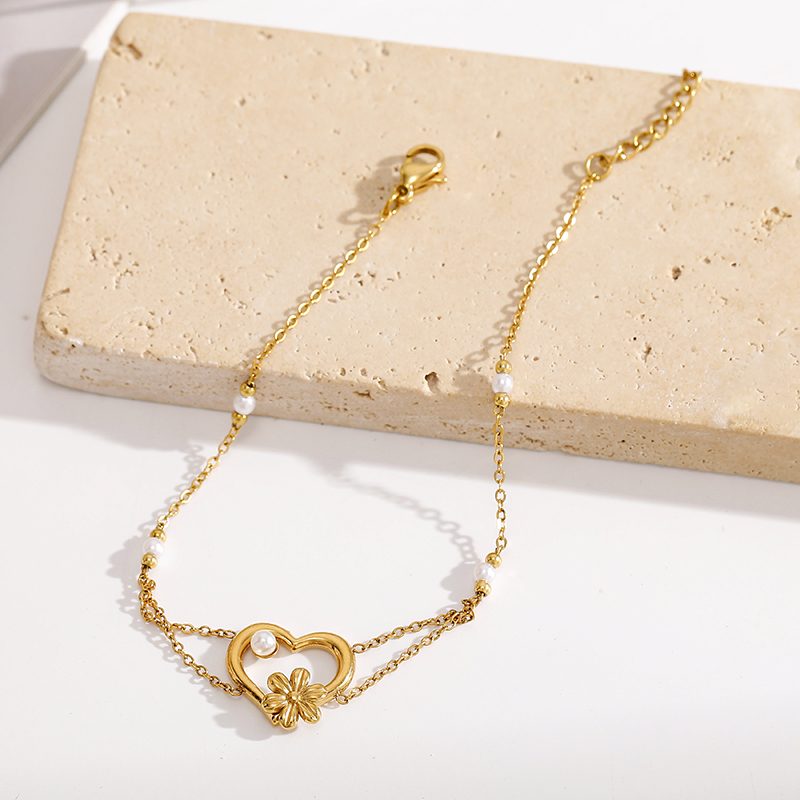
Two practical notes for stainless steel bracelets specifically. First, many designs include extender chains (an extra 2–3 cm of links after the clasp) — which is effectively a built-in fit range covering snug through relaxed on one bracelet. Second, steel's durability means the bracelet you size today keeps its exact geometry for years — no stretching, no warping — so the measurement holds. Browse chain and charm bracelets with extender options for the easiest fit.
Sizing by Bracelet Type
The wrist number is the constant; each bracelet type applies it differently:
- Chain bracelets: wrist + fit allowance, as charted above. The straightforward case.
- Bangles: sized to the hand's widest point (thumb-tucked), not the wrist — see the hand-measurement rule below.
- Cuffs: the most forgiving — open designs flex to fit, so the wrist measurement only picks the size bracket (small/medium/large).
- Bead and charm bracelets: add an extra half-centimeter for charm bulk that accumulates — size for the wrist you'll have with ten beads, not zero.
- Anklets: same method, measured around the ankle just above the ankle bone, typically 21–24 cm for women plus the fit allowance. The sizing logic in our anklet meaning guide covers fit and wear.
(The bangle hand-measurement rule in the section above is the one that trips people — wrist sizing and bangle sizing genuinely diverge.)
Sizing for Gifts: The Detective Method
Gifting a bracelet without asking? The reliable moves: borrow a bracelet she already wears and measure its length (the gift-safe equivalent of the borrowed-ring trick); compare wrist-to-height proportions on photos; or default to an adjustable design — open adjustable cuffs and extender-chain bracelets absorb a full centimeter of guessing error, which is exactly why steel brands make so many of them. When all else fails, wrap the receipt discreetly — a bracelet exchanged for the right size is still a bracelet loved.
FAQ
How do I measure my wrist for a bracelet without a tape? Wrap a strip of paper or string around the wrist below the wrist bone, mark the overlap, and measure it against a ruler. Add the fit allowance (1–2.5 cm) from the chart and you have your bracelet size.
How tight should a bracelet be? The standard fit lets the bracelet slide about a finger's width along the wrist — present but not gripping. Snug fits (plus 1 cm) suit delicate chains; relaxed fits (plus 2.5 cm) suit chunky styles.
What is the average bracelet size for a woman? Most women's wrists measure 14.5–16.5 cm around, which puts standard bracelet sizes at 16.5–18.5 cm. Measure anyway — wrists vary more than averages suggest.
Do bangles and chain bracelets use the same size? No — bangles must fit over the hand, so size them to your hand's widest point (thumb tucked in) rather than the wrist. Chain bracelets size to the wrist circumference plus allowance.
What if my bracelet is between sizes? For chains with a clasp, size up — an extender chain or slightly loose fit is wearable every day, while a tight one isn't. For bangles, size to the hand it must slide over. Adjustable open designs split the difference and cover both.
Do bracelets fit the same on both wrists? Mostly, but wrists differ slightly — the dominant hand tends to run a touch larger. If you wear bracelets on both wrists and swap between them, measure the larger wrist once and size to it; the smaller side forgives the extra few millimeters far better than the reverse ever could.
Does bracelet sizing change for wearing over a watch? Yes — if the bracelet shares the wrist with a watch, size as if for a wide band: the watch case adds bulk and the bracelet has to bridge around it. Add a half-centimeter to the standard allowance, or wear them on opposite wrists, where each gets its own true fit.
 How to Write Jewelry Product Descriptions That Sell
 How to Start a Charm Bracelet: Beginner's Guide
 Why Does My Jewelry Smell? Causes and Fixes
 How to Measure Bracelet Size: The Wrist Guide